Writing a memoir is as much about which stories to leave out as what needs to stay. Here’s a story that didn’t make the cut:
I loved Colorado. My family moved there from Texas when I was six. Goodbye to the flat Texas Panhandle. Goodbye to Amarillo air raid sirens wailing tornado warnings. Now when my brother Paul and I played, the Rocky Mountains shone in the distance. The air was dry and crisp, not heavy with humidity. We settled in Wheat Ridge, a suburb west of Denver.
Our home was one half of a yellow brick duplex, a little house with only two bedrooms. I was the oldest of three. Baby sister Lori slept in a crib in my room. My brother slept in a large linen closet with louver doors and a deep shelf wide enough for a four-year old to fit. Trying to make it seem fun, my mother called it his ship’s bunk. She put in a small lamp with a miniature ship’s wheel for authenticity. “There,” she said, “that’s cute!”
But both Paul and I knew it was still a closet.
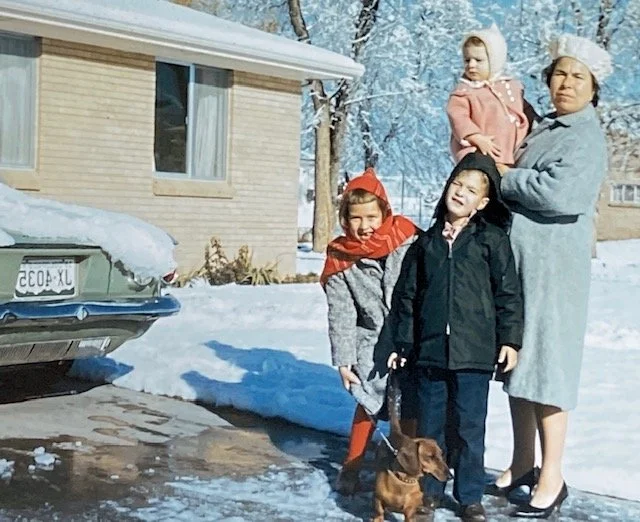
In 1962, Wheat Ridge was still a small town with wide swaths of open space. A field of untouched prairie grass and wildflowers spread behind our house, a wonderful place to play. With my mother busy setting up a new home and caring for a one-year old toddler, Paul and I were often left to our own devices. We played together back then, the almost-two years difference in our ages not yet important.
That field became our special place. We played hide-and-seek, chasing each other like rabbits. We picked bouquets that we brought home to our mother. We played fort and ship-wreak. Our tee-shirts billowed in the wind that dried the tall grasses under the summer sun.
Paul and I already had our assigned roles in the family. At least that’s the way I remember it. I was the oldest, quiet and shy. He was outgoing, mischievous – a “true” boy. As the only son, and his misdeeds were overlooked, to my eyes even admired. Once, right after we moved to Wheat Ridge, he and another boy dug up our neighbor’s tulip bulbs. Except for a stern talking-to they received no punishment. I always felt he was my mother’s favorite. His outgoing personality was so much like hers, whereas my shyness disturbed her. Why would I rather read books or only talk to people? Of course whenever one of our games went wrong, Paul was the culprit.
That summer, we became fascinated by matches, by candles, flame of any kind. When Mom was busy in another part of the house we played at the kitchen stove, holding pencils or carrots over the burners. We discovered how fire could consume and destroy. And we wanted more. I don’t remember we got the idea of setting fire to grass. Perhaps it was a natural progression, perhaps we had heard about a grass fire somewhere nearby, a not uncommon in the dry American west. Whatever the reason, one of us came up with the idea of taking our fire experiments outdoors.
For years I believed Paul was the culprit. But when I asked him about it recently, he denied that accusation.
“You were six and I was four. Who do you think came up with the idea?”
That’s not how I remember it but he planted a flicker of doubt. Perhaps I wasn’t the good one after all.
If what Paul says is true, then I procured the matches, slyly lifting them from a kitchen drawer. Shaking the box so that it rattled seductively, I whispered, “Come on, Paul.”
I must have convinced him. He still thought following me was fun. We ran through our small backyard with the clothesline full of sheets snapping in the wind and out into the vacant field. We knew just how far we had to go before we could hunker down, hidden by the wild grass. The wind whipped our hair, the wind that would soon prove our undoing.
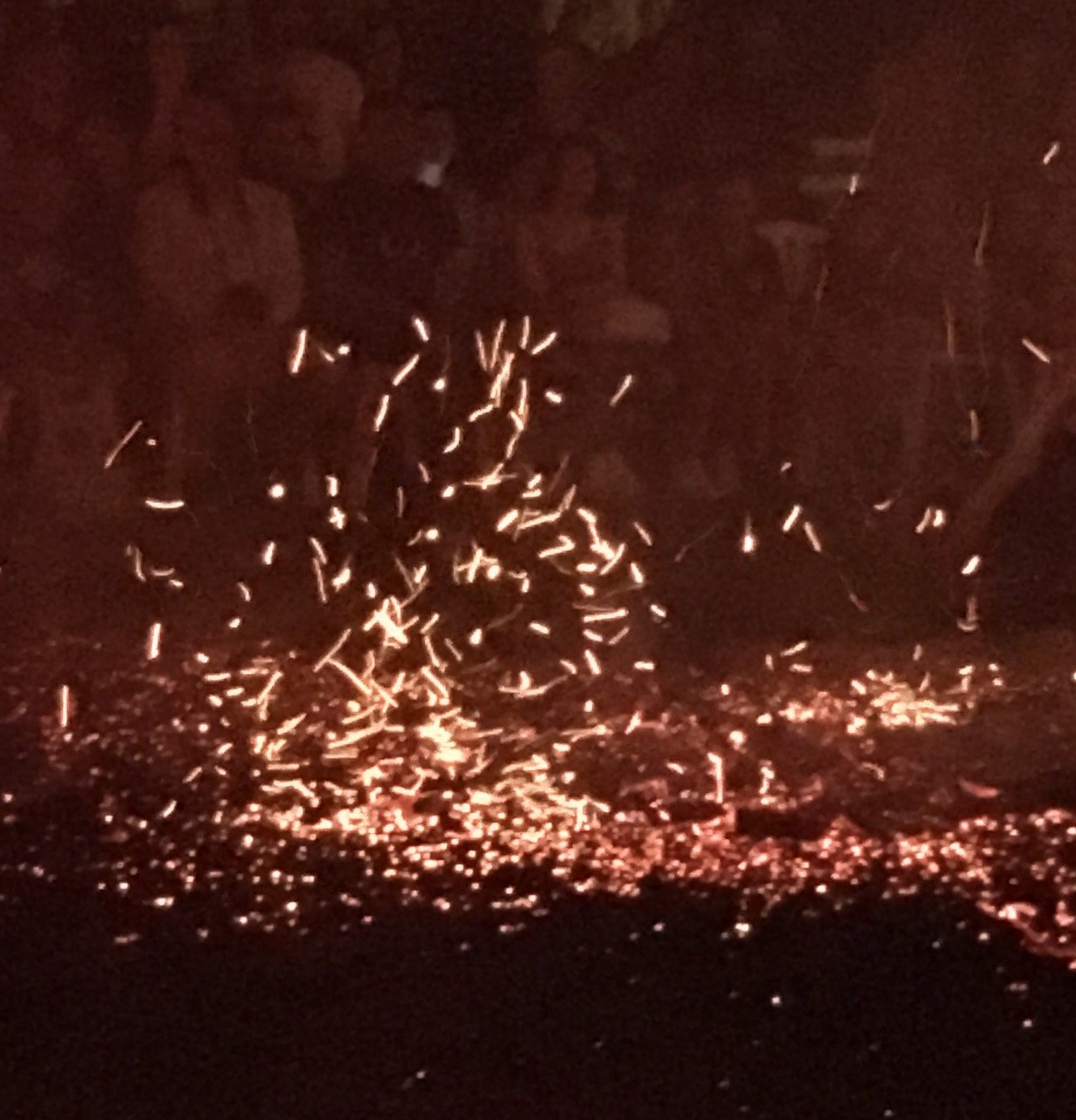
It doesn’t matter who lit the match. As the first spark leapt from tip to grass, the wind we were too young to understand set it dancing from one stalk to the next. Suddenly aware of the fact that we were no longer in control, we tried stamping out the flames. It was no use. Within seconds the fire spread through the grass and raced toward our backyard - and the other backyards on either side. I didn’t realize it, but we were lucky we were downwind so the blaze raced away instead of surrounding us, blocking off our escape route.
Paul cried, “Don’t tell Mom, don’t tell Mom!” Even then, I knew it was a ridiculous, illogical four-year old thing to say. How could we keep this from her? We’d be lucky if we could get to an adult before the whole neighborhood burned down. There was no time to worry about a spanking or a long lecture; we had to get out of that field. I grabbed my brother’s hand and started to run.
Soon adults swirled into action: neighbors dashing out, grabbing garden houses, my mother yelling. Of course back then all the men were at work; it was the mothers who saved our houses. I don’t recall any sirens or fire trucks; surely I’d remember if they had arrived. Or perhaps my guilt erased that memory.
But I have never forgotten the charred field and smell of burnt grass. And that terrible black line in our backyard where the fire stopped, almost up to the clothesline still full of laundry.
Have you ever had someone challenge your memory of an event? Did you believe them?
I’d love to hear your story.