I’m always excited when my friend Andrea Eschen’s Substack Building Modern Chicago plops into my inbox. Andrea writes about her great-grandfather Victor Falkenau and the part he played in helping build modern Chicago. Falkenau was an important contractor in the late 19th and early 20th centuries. He worked with famous architects such as Louis Sullivan and his family was prominent in Chicago society. Every time I read Andrea’s posts, I learn something new about my hometown.
But what amazes me more is the breadth of information she has about her family. Unlike Andrea, I know very little about my Rizzo ancestors. My father never knew his Rizzo relatives who lived in Chicago at the same time as Andrea’s family. When he was a very young boy, his father left and his mother placed him and his three older siblings in an orphanage run by a Protestant organization. Dad kept in touch with his mother over the years, so he knew his parents came from very different backgrounds which caused (we think) their split. Dad’s older brother told stories of his father Sam being a bootlegger. Beyond that, my father’s family remained a mystery until a few years ago.
My parents met in Chicago after my mother, like many southerners, moved to Chicago after World War II. After snagging my father’s heart, she convinced him to move back to Texas with her where they started their family. Our family spent my early years moving around Texas and Colorado before we settled in my father’s hometown.
Wanting to make family connections, my mother decided to find some of my father’s long-lost Rizzo relatives. Opening the fat yellow Chicago telephone book didn’t help. Rizzo is a very common Italian name especially in Sicily. And there are a lot of Italians in Chicago. She found almost twenty thin-papered pages covered with Rizzos. Hundreds and hundreds of Rizzos. Which ones could be related to us?
Finally, going on a tip she gained during a rare visit to my father’s mother, Mom tried a different tack. One of my grandfather’s relatives, perhaps his sister, had married a man named Zappia. Luckily, that name wasn’t as common as Rizzo. Mom went through the phone book again. Dialing over and over. After a few attempts, she hit pay dirt – of a kind. On her last call, when she explained her purpose, the woman answering the phone snapped, “We want nothing to do with those Rizzos.” And hung up.
My mother laughed and turned to me, “What do you suppose that meant?” Perhaps the stories about my grandfather were true.
And there we left it. We all stopped trying to find anything more. I heard those few stories, joked with friends about being Sicilian. I felt no need to be part of that family.
Until, that is, my father began to slide into dementia. As my father’s mind slipped away my need to understand him grew and I began writing a memoir about our relationship. I was sure the story of his abandoned childhood was key. The missing Rizzo haunted me.
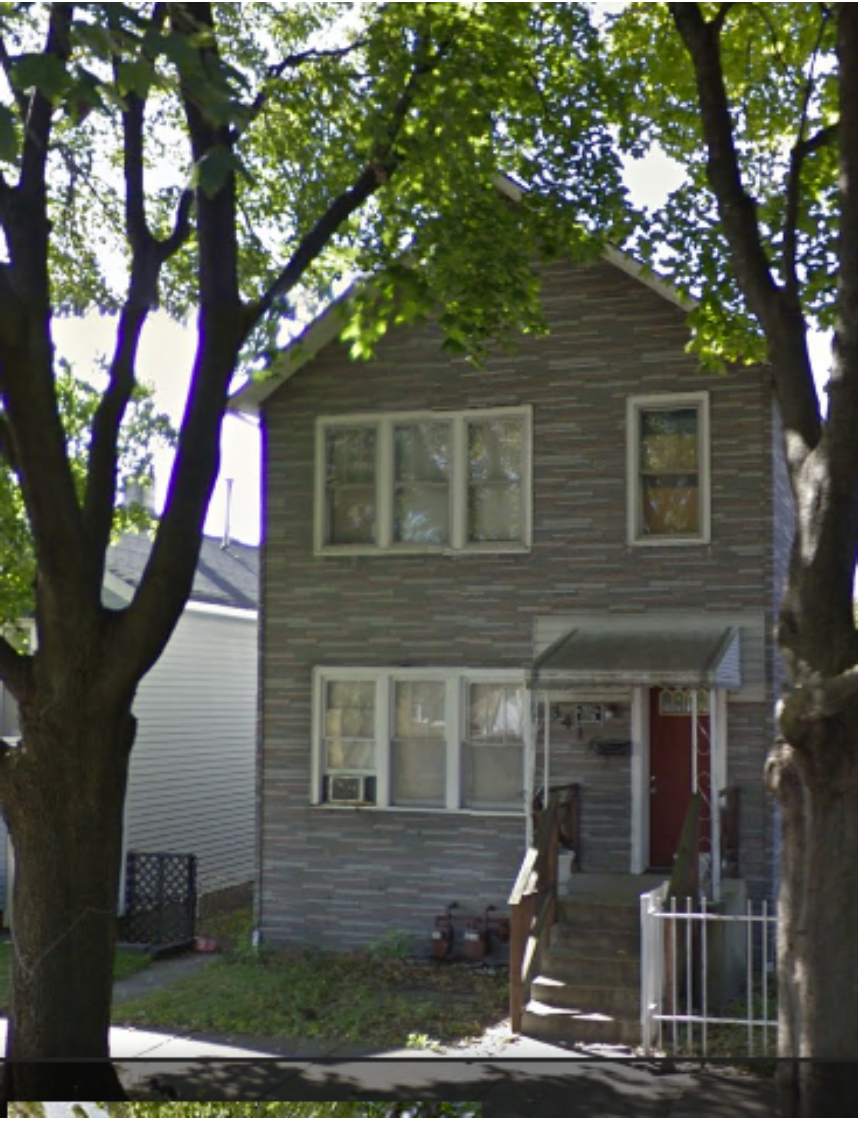
My grandparents’ house on the south side of Chicago.
I would have to wait for my sister-in-law Jill to help. Jill, a dogged researcher who loves genealogy, took up the cause of finding out about our Italian roots. Unfortunately, she too kept coming up short. She could find no mention of a Sam Rizzo anywhere in records at Ellis Island or Chicago or Cook County, Illinois. She tried Samuele, Salvatore, any configuration of a first name that sounded more Italian than Sam. We wondered if he had snuck across the Canadian border as an undocumented immigrant.
Then, a few years ago as we sat around the dining table, Jill brought up the research she’d been doing. Reminiscing, my mother told the story of that long-ago telephone call. Jill said, “Zappia? I’ve never heard that name before,” and jumped up to find a pencil.
The name proved to be a crucial piece of the puzzle. Looking up Zappia, Jill found records of Lena Zappia, my grandfather’s oldest sister. She found records of his parents Antonio and Crucifissa Rizzo, my great-grandparents.
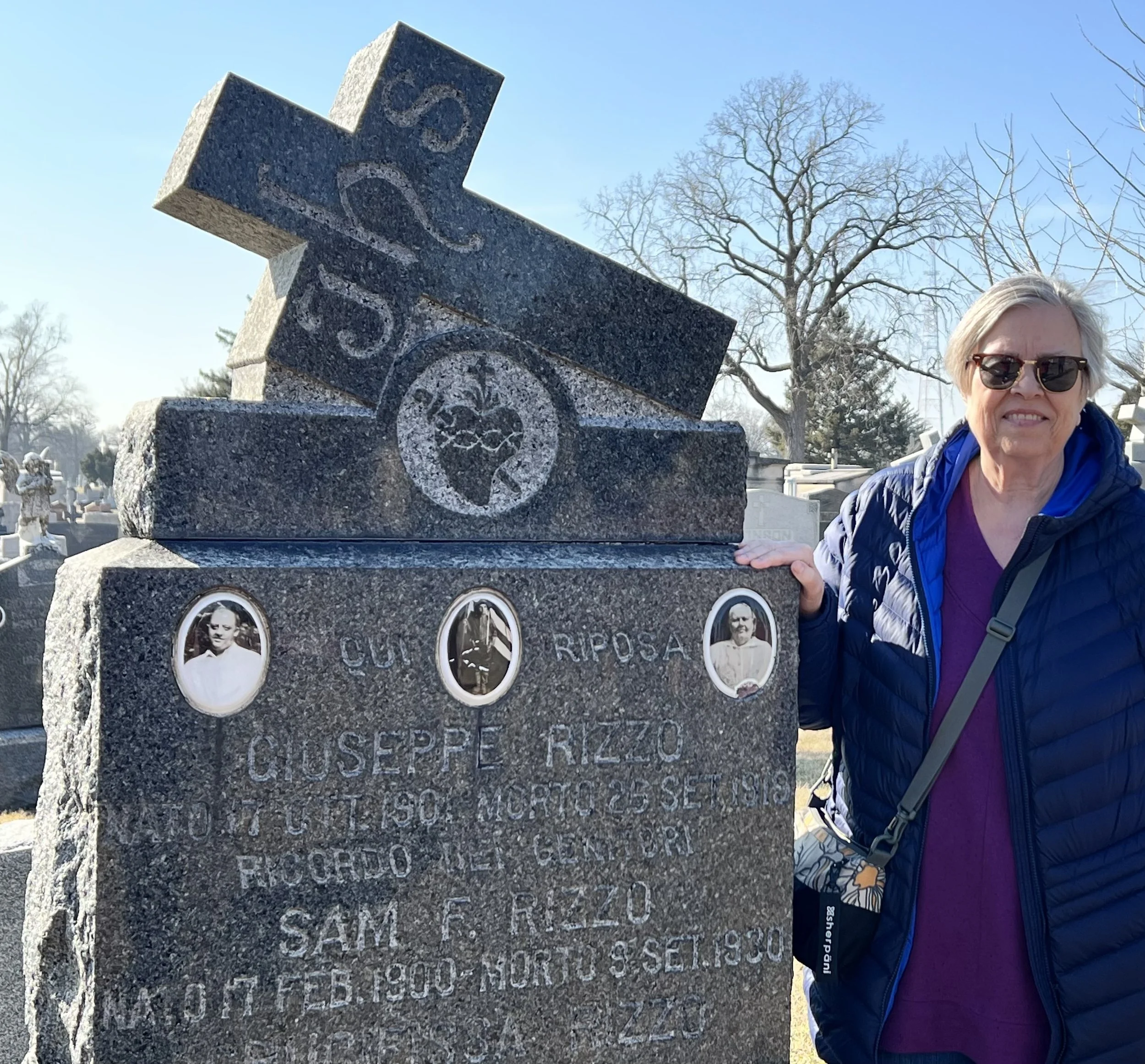
She even found the family gravesite in Chicago where Antonio, Crucifissa, and three of their sons, including Sam, my grandfather, were buried.
Unfortunately for my father, those discoveries came too late. His dementia was too pronounced and he died not long afterward. When I visited that cemetery with my sisters the summer after his death it felt a pilgrimage to honor him. And for his daughter, the writer, it became an important part of my own story. I still have work to do.
Do you have family mysteries to uncover? Or stories to tell? I’d love to hear them.